Diversification Always Looks Wrong to Someone

Look at your statement, then at the headline number for “the market,” and at some point you’ll probably ask a fair question: why am I behind?
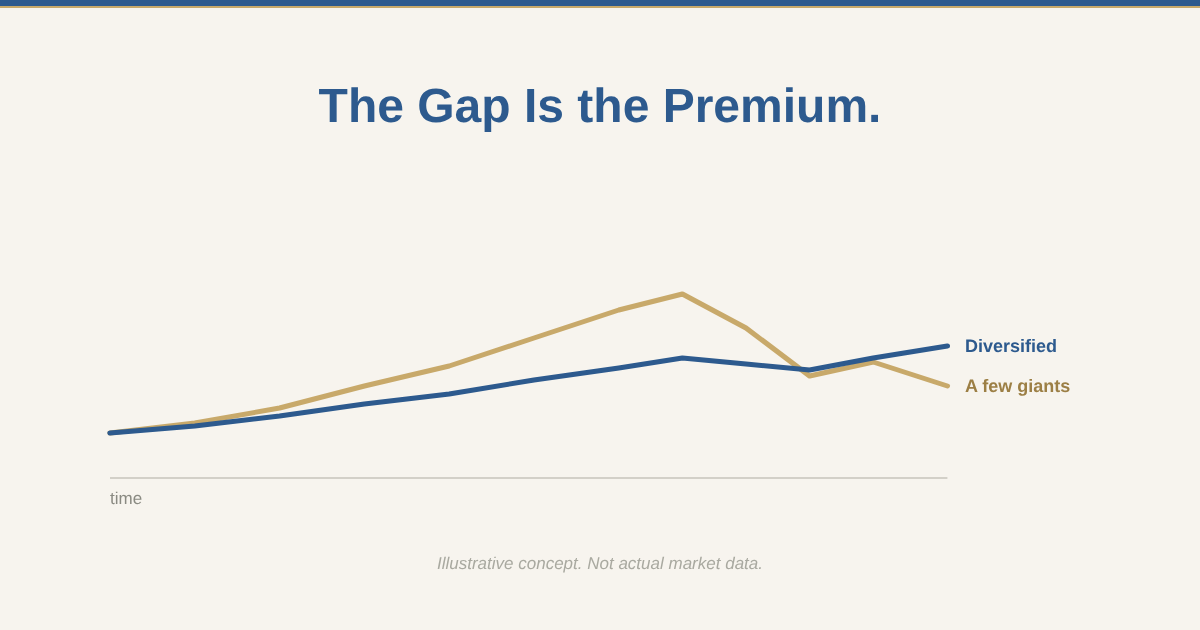
Usually the answer is that the market everyone quotes has been carried by a small group of very large companies. When those few names are running, an index weighted toward them looks brilliant, and anything spread more widely looks a step slow. That has been the story for much of the last several years with big tech.
Then the wind shifts. Lately some of those same giants have dropped sharply from their highs, and the question flips. Now people want to know whether they’re too exposed.
Here’s the thing worth seeing: both questions come from the same place. A diversified portfolio is built so that it never fully matches whatever is winning right now. That’s not a flaw. That’s the design.
Think about homeowner’s insurance. You pay the premium every year, and in almost every year your house doesn’t burn down. Nobody sensible looks back at a decade of premiums and says, “What a waste, I should have skipped it.” You bought protection against an outcome you couldn’t predict, and the fact that it didn’t happen doesn’t mean the protection was worthless.
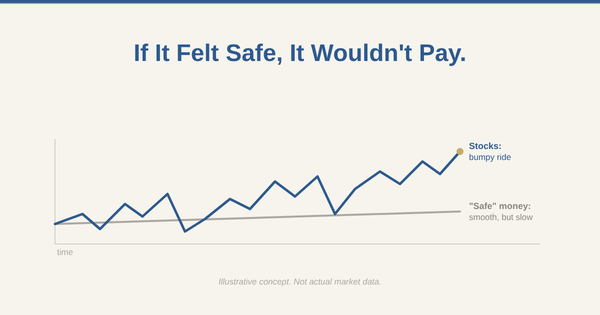
Owning small companies, international companies and emerging markets alongside the big U.S. names works the same way. In the years when the giants lead, that spread costs you a little - you’ll trail the headline index, sometimes by enough to notice. That shortfall is the premium. What it buys is not having your future ride on whether a handful of companies keep living up to enormous expectations.
If every piece of your portfolio is soaring at the same time, you probably don’t own a diversified portfolio - you own one big bet wearing several different labels.
The hard part is that the premium is visible and the protection isn’t. You see the gap between your return and the index every quarter. You never see the losses you avoided in the scenario that didn’t happen. That’s why diversification always looks wrong to somebody - the person who wishes they’d owned more of what went up, or the person who wishes they’d owned less of what went down.
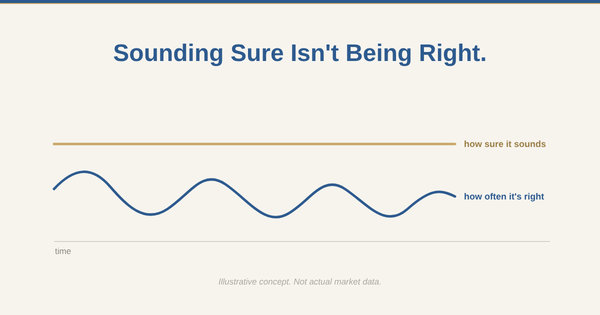
I can’t tell you which group of stocks will lead over the next five years. Neither can anyone else, no matter how sure they sound. What I can tell you is that a portfolio built to hold up across many different outcomes doesn’t need that forecast to be right.
So when your portfolio doesn’t look like the index, that’s not a sign something is broken. It’s a sign it’s doing exactly what it was built to do.