The Only Thing You Had to Do
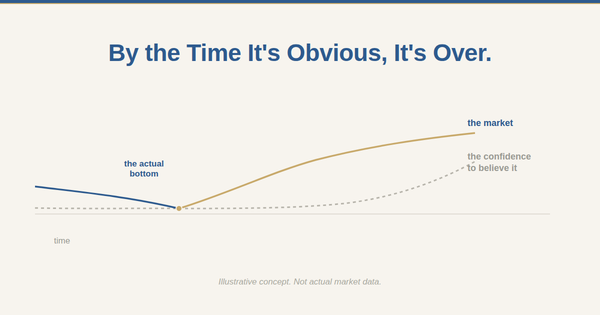
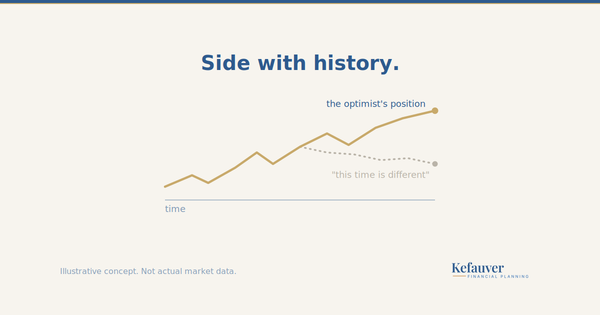
Dot-com, 2008, COVID. Through every one, the market eventually came back. The only thing you had to do to capture the recovery was stay put.

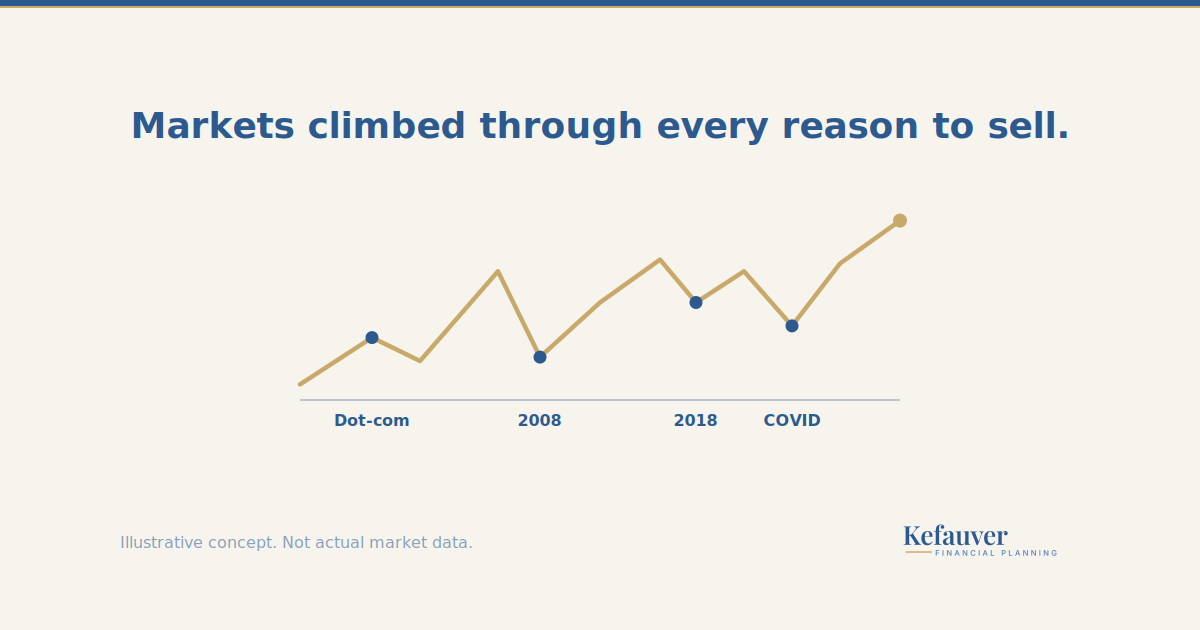
Over the past twenty-some years, there's been no shortage of good reasons to sell your stocks and get out.
The dot-com bust convinced a lot of people that technology was radioactive. Then 2008, when the banking system genuinely looked like it might not make it. In 2011 we had a debt ceiling standoff and a credit downgrade. The trade war in 2018. And then COVID in early 2020, the fastest 30% drop the market had ever seen.
Every one of those moments came with a compelling story for why selling was the smart, responsible thing to do. Selling felt like safety.
And every time, the people who did nothing, who just held on, came out the other side fine. Better than fine. The single thing you had to do to earn the market's long-term returns was to not sell at the exact moment selling felt most reasonable.
That's the strange part of this business. Most people assume investing rewards intelligence, the best information, the fastest reaction. It mostly doesn't. It rewards temperament.
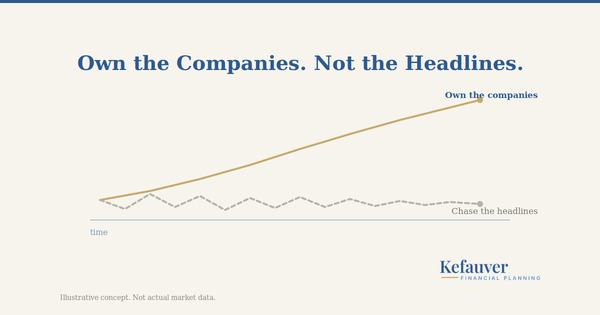
When the headlines are bad and your account is down, selling doesn't feel like panic. It feels like self-preservation. But that's usually the moment selling does the real damage, because it turns a temporary decline into a permanent loss and puts you on the sidelines for the recovery, whenever it comes.
The encouraging thing is that temperament isn't something you're either born with or not. You can build it.
It starts with expecting the drops instead of being surprised by them. Markets fall. That isn't a malfunction, it's the price of admission for the returns stocks have historically offered. If you go in knowing the rough stretches are coming, you're far less likely to do something rash when one arrives.
It also helps enormously to have a plan tied to your actual goals and timeline. When you know what a particular pot of money is for and when you'll need it, the daily noise loses its grip. If you won't touch that money for fifteen or twenty years, a bad few months, however unpleasant, simply doesn't have much to do with you.
And it helps to spend your energy on the things you can actually control. Not the market, you can't control that, and neither can anyone else. But your savings rate, your spending, and your own behavior in the hard moments, those are entirely yours.
I've sat with a lot of people through ugly markets. The ones who came out ahead weren't smarter or luckier. They were steadier. They didn't sell when every instinct told them to.
So the next time the news is grim and your statement looks worse, try to remember that this is the moment that counts. Not the calm years. This one.
Investing isn't a contest of intelligence. It's the discipline to stay put when the people around you are losing their nerve. That's the whole game, and it's something you can get better at.